
Anatomy of the Spine
Overview
The spine is one of the most important body parts as it is the foundation of the body to support our body’s weight. The spine comprises of multiple bones, called vertebrae, stacked together from the neck (cervical area) to the waist (lumbar area).
The spine is made of 33 individual bones stacked one on top of the other. This spinal column provides the main support for our body, allowing us to stand upright, bend, and twist, while protecting the spinal cord from injury. Strong muscles and bones, flexible tendons and ligaments, and sensitive nerves contribute to a healthy spine. Yet, any of these structures affected by strain, injury, or disease can cause pain.
Back muscles
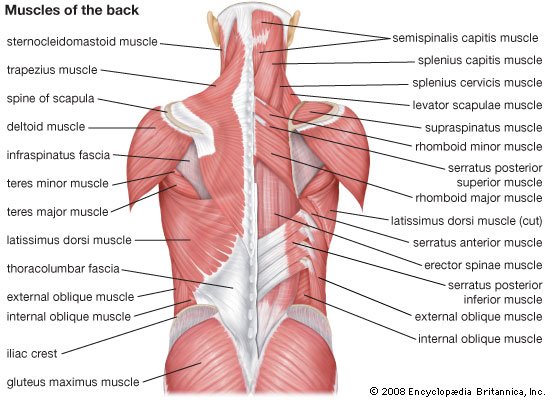
The muscles of the back are attached to the spine by connecting tendons and ligaments. The two main muscle groups that affect the spine are extensors and flexors. The extensor muscles enable us to stand up and lift objects. The extensors are attached to the back of the spine. The flexor muscles are in the front and include the abdominal muscles. These muscles enable us to flex, or bend forward, and are important in lifting and controlling the arch in the lower back.
The back muscles stabilize our spine. Something as common as poor muscle tone or a large belly can pull our entire body out of alignment.
Vertebrae
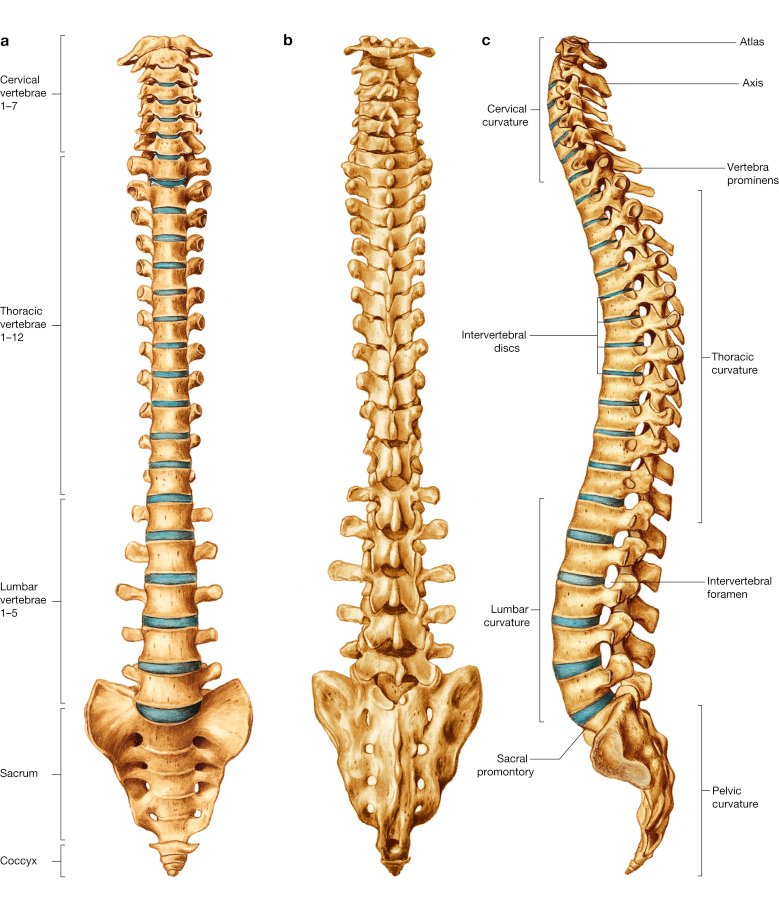
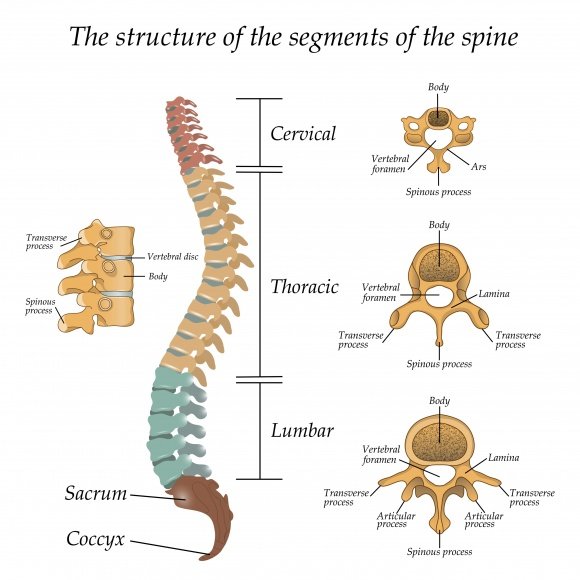
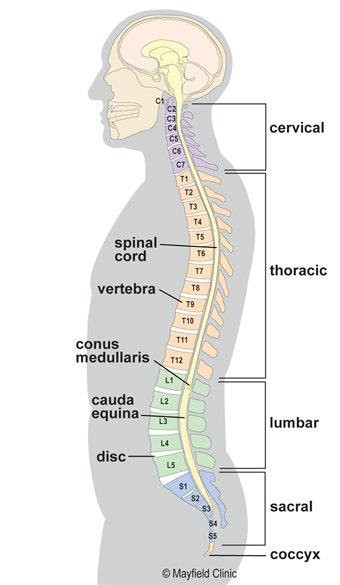
Vertebrae are the 33 individual bones that interlock with each other to form the spinal column. The vertebrae are numbered and divided into regions: cervical, thoracic, lumbar, sacrum, and coccyx. Only the top 24 bones are moveable; the vertebrae of the sacrum and coccyx are fused. The vertebrae in each region have unique features that help them perform their main functions.
Cervical (neck) – the main function of the cervical spine is to support the weight of the head (about 10 pounds). The seven cervical vertebrae are numbered C1 to C7. The neck has the greatest range of motion because of two specialized vertebrae that connect to the skull. The first vertebra (C1) is the ring-shaped atlas that connects directly to the skull. This joint allows for the nodding or “yes” motion of the head. The second vertebra (C2) is the peg-shaped axis, which has a projection called the odontoid, that the atlas pivots around. This joint allows for the side-to-side or “no” motion of the head.
Thoracic (mid back) – the main function of the thoracic spine is to hold the rib cage and protect the heart and lungs. The twelve thoracic vertebrae are numbered T1 to T12. The range of motion in the thoracic spine is limited.
Lumbar (low back) – the main function of the lumbar spine is to bear the weight of the body. The five lumbar vertebrae are numbered L1 to L5. These vertebrae are much larger in size to absorb the stress of lifting and carrying heavy objects.
Sacrum – the main function of the sacrum is to connect the spine to the hip bones (iliac). There are five sacral vertebrae, which are fused together. Together with the iliac bones, they form a ring called the pelvic girdle.
Coccyx region – the four fused bones of the coccyx or tailbone provide attachment for ligaments and muscles of the pelvic floor.
Intervertebral disc
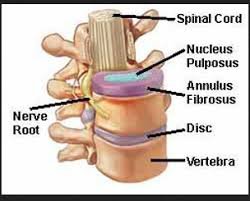
Each vertebra in our spine is separated and cushioned by an intervertebral disc, which keeps the bones from rubbing together. Discs are designed like a radial car tire. The outer ring, called the annulus, has crisscrossing fibrous bands, much like a tire tread. These bands attach between the bodies of each vertebra. Inside the disc is a gel-filled center called the nucleus.
Discs function like coiled springs. The crisscrossing fibers of the annulus pull the vertebral bones together against the elastic resistance of the gel-filled nucleus. The nucleus acts like a ball bearing when you move, allowing the vertebral bodies to roll over the incompressible gel. The gel-filled nucleus contains mostly fluid. This fluid is absorbed during the night as you lie down and is pushed out during the day as you move upright.
With age, our discs increasingly lose the ability to reabsorb fluid and become brittle and flatter; this is why we get shorter as we grow older. Also diseases, such as osteoarthritis and osteoporosis, cause bone spurs (osteophytes) to grow. Injury and strain can cause discs to bulge or herniate, a condition in which the nucleus is pushed out through the annulus to compress the nerve roots causing back pain.
Vertebral arch and spinal canal
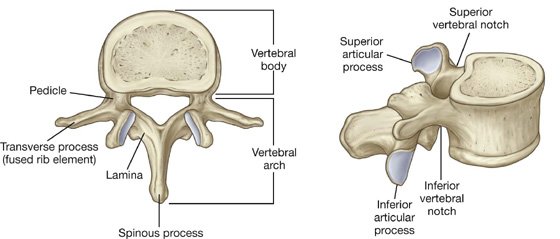
On the back of each vertebra are bony projections that form the vertebral arch. The arch is made of two supporting pedicles and two laminae. The hollow spinal canal contains the spinal cord, fat, ligaments, and blood vessels. Under each pedicle, a pair of spinal nerves exits the spinal cord and pass through the intervertebral foramen to branch out to your body.
Surgeons often remove the lamina of the vertebral arch (laminectomy) to access the spinal cord and nerves to treat stenosis, tumors, or herniated discs.
Seven processes arise from the vertebral arch: the spinous process, two transverse processes, two superior facets, and two inferior facets.
Facet joints
The facet joints of the spine allow back motion. Each vertebra has four facet joints, one pair that connects to the vertebra above (superior facets) and one pair that connects to the vertebra below (inferior facets).
Ligaments
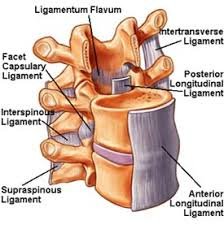
The ligaments are strong fibrous bands that hold the vertebrae together, stabilize the spine, and protect the discs. The three major ligaments of the spine are the ligamentum flavum, anterior longitudinal ligament (ALL), and posterior longitudinal ligament (PLL). The ALL and PLL are continuous bands that run from the top to the bottom of the spinal column along the vertebral bodies. They prevent excessive movement of the vertebral bones. The ligamentum flavum attaches between the lamina of each vertebra.
Spinal cord
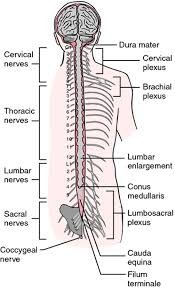
The spinal cord is about 18 inches long and is the thickness of our thumb. It runs from the brainstem to the 1st lumbar vertebra protected within the spinal canal. At the end of the spinal cord, the cord fibers separate into the cauda equina and continue down through the spinal canal to your tailbone before branching off to our legs and feet. The spinal cord serves as an information super-highway, relaying messages between the brain and the body. The brain sends motor messages to the limbs and body through the spinal cord allowing for movement. The limbs and body send sensory messages to the brain through the spinal cord about what we feel and touch. Sometimes the spinal cord can react without sending information to the brain. These special pathways, called spinal reflexes, are designed to immediately protect our body from harm.
Any damage to the spinal cord can result in a loss of sensory and motor function below the level of injury. For example, an injury to the thoracic or lumbar area may cause motor and sensory loss of the legs and trunk (called paraplegia). An injury to the cervical (neck) area may cause sensory and motor loss of the arms and legs (called tetraplegia, formerly known as quadriplegia).
Spinal nerves
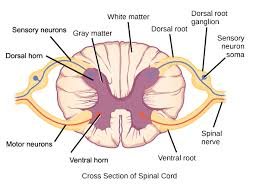
Thirty-one pairs of spinal nerves branch off the spinal cord. The spinal nerves act as “telephone lines,” carrying messages back and forth between our body and spinal cord to control sensation and movement. Each spinal nerve has two roots. The ventral (front) root carries motor impulses from the brain and the dorsal (back) root carries sensory impulses to the brain. The ventral and dorsal roots fuse together to form a spinal nerve, which travels down the spinal canal, alongside the cord, until it reaches its exit hole – the intervertebral foramen. Once the nerve passes through the intervertebral foramen, it branches; each branch has both motor and sensory fibers. The smaller branch (called the posterior primary ramus) turns posteriorly to supply the skin and muscles of the back of the body. The larger branch (called the anterior primary ramus) turns anteriorly to supply the skin and muscles of the front of the body and forms most of the major nerves.
The spinal nerves are numbered according to the vertebrae above which it exits the spinal canal. The 8 cervical spinal nerves are C1 through C8, the 12 thoracic spinal nerves are T1 through T12, the 5 lumbar spinal nerves are L1 through L5, and the 5 sacral spinal nerves are S1 through S5. There is 1 coccygeal nerve.
The spinal nerves innervate specific areas and form a striped pattern across the body called dermatomes. Doctors use this pattern to diagnose the location of a spinal problem based on the area of pain or muscle weakness. For example leg pain (sciatica) usually indicates a problem near the L4-S3 nerves.
Back Pain
Back pain is one of the most common reasons where people go to the doctor or miss work, and it is a leading cause of disability worldwide. Fortunately, we can take measures to prevent or relieve most back pain episodes. If prevention fails, simple home treatment and proper body mechanics often will heal our back within a few weeks and keep it functional. Surgery is rarely needed to treat back pain.
Types of back pain
Back pain is categorized into two types:
- Acute pain starts suddenly and lasts for up to 6 weeks.
- Chronic or long-term pain develops over a longer period, lasts for over 3 months, and causes ongoing problems.
Risk factors of back pain
Anyone can develop back pain, even children and teens. These factors might put us at greater risk of developing back pain:
- Age: Back pain can affect people of any age, is more common as we get older, starting around age 30 or 40.
- Lack of exercise: People who do not perform regular exercise will not have strong back muscles to support the spine. Weak, unused muscles in our back and abdomen might lead to back pain.
- Overweight: Excess weight puts extra pressure to the spine, hence accelerating spine degeneration. Also, fat around the abdomen impairs the body’s natural balance and increases the risk of injury or accidents.

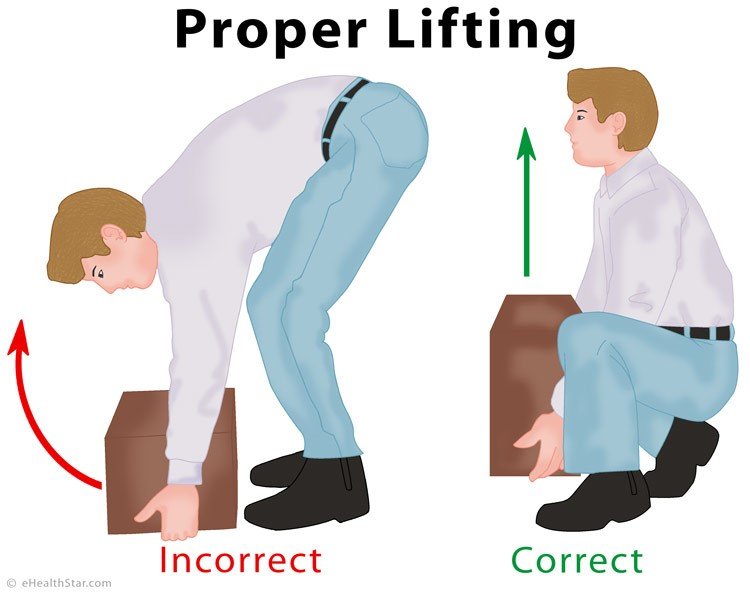
- Job: Jobs that requires lifting, pushing or pulling can temporarily or permanently twist the spine. Improper lifting using our back instead of our legs can lead to back pain, as well as bending the back to lift heavy objects will transfer the weight to a bent spine. People who work at a desk for long periods of time may get back pain.
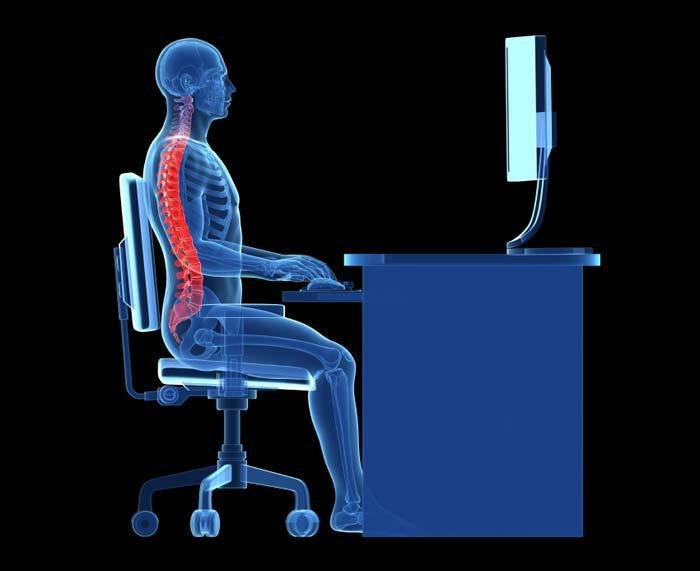
- Movement and posture: Bad posture and body movement are the most common causes of back pain, mainly in people who work with computers (especially laptops) for long period. Poor sitting posture with back bent, stooped shoulders and over-lowing head towards the computer screen.

- Back pain can also result from some everyday activities or poor posture. Examples include:
- twisting
- coughing or sneezing
- muscle tension
- over-stretching
- bending awkwardly or for long periods
- pushing, pulling, lifting, or carrying something
- standing or sitting for long periods
- straining the neck forward, such as when driving or using a computer
- long driving sessions without a break, even when not hunched
- sleeping on a mattress that does not support the body and keep the spine straight
- Psychological conditions: People prone to depression, stress, anxiety and mood disorders appear to have a greater risk of back pain.
- Smoking: Smokers have increased rates of back pain. This may occur because smoking prompts more coughing, which can lead to herniated disks. Smoking can also decrease blood flow to the spine and increase the risk of osteoporosis.
- Other risk factors:
- Pregnancy and hormonal factors
- a sedentary lifestyle
- poor physical fitness
- strenuous physical exercise or work, especially if done incorrectly
- genetic factors
Causes of back pain
Back pain often develops without a cause. It’s often not possible to identify the cause of back pain so it is called non-specific back pain. The common causes of back pain are:
- Sprain or strain: Back pain commonly stems from strained muscles or ligaments, a muscle spasm, muscle tension. Activities that can lead to strains or spasms include:
- lifting something improperly
- lifting something that is too heavy
- making an abrupt and awkward movement
- Ruptured disks: Each vertebra in the spine is cushioned by disks. If the disk ruptures there will be more pressure on a nerve, resulting in back pain.
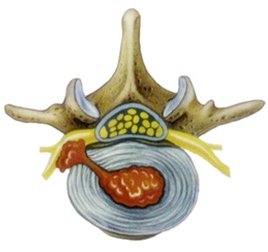
- Bulging disks: In much the same way as ruptured disks, a bulging disk can result in more pressure on a nerve.
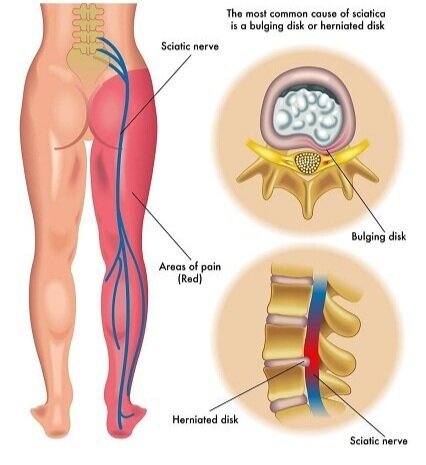
- Sciatica: A sharp and shooting pain travels through the buttock and down the back of the leg, caused by a bulging or herniated disk pressing on a nerve.
- Arthritis: Osteoarthritis can cause problems with the joints in the hips, lower back, and other places. In some cases, the space around the spinal cord narrows. This is known as spinal stenosis.
- Abnormal curvature of the spine: If the spine curves in an unusual way, back pain can result. An example is scoliosis, in which the spine curves to the side.
- Osteoporosis: Bones, including the vertebrae of the spine, become brittle and porous, making compression fractures more likely.
- Back injuries: Back injuries caused by an accident or sports (such as cricket, football). The continuous impact from sports may accelerate spine degeneration.
- Congenital disorders: Congenital disorders such as congenital stenosis, congenital scoliosis, congenital vertebral abnormalities (transitional vertebra) can contribute to back pain.
- Cancer of the spine: A tumor on the spine may press against a nerve, resulting in back pain.
- Infection of the spine: A fever and a tender, warm area on the back could be due to an infection of the spine.
- Other infections: Pelvic inflammatory disease, bladder, or kidney infections may also lead to back pain.
- Sleep disorders: Individuals with sleep disorders are more likely to experience back pain, compared with others.
- Shingles: An infection that can affect the nerves may lead to back pain. This depends on which nerves are affected.
- Other non-spine diseases: kidney disease, ovary and uterus diseases, abdominal aortic aneurysm, or cancer spreading to the spine may cause pain radiating into the back.
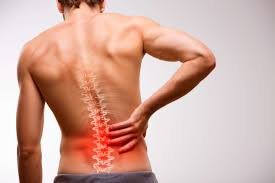
The main symptom of back pain is an ache or pain anywhere in the back, and sometimes all the way down to the buttocks and legs. Some back issues can cause pain in other parts of the body, depending on the nerves affected. Back pain can range from a muscle aching to a shooting, burning or stabbing sensation. In addition, the pain may radiate down our leg or worsen with bending, twisting, lifting, standing or walking.
Sciatica: Irritation of the nerve that runs from the pelvis to the feet
These conditions tend to cause additional symptoms, such as numbness, weakness or a tingling sensation, and they’re treated differently from non-specific back pain.
Cauda equina syndrome: The cauda equine is a bundle of spinal nerve roots that arise from the lower end of the spinal cord. Symptoms include a dull pain in the lower back and upper buttocks, as well as numbness in the buttocks, genitalia, and thighs. There are sometimes bowel and bladder function disturbances.
The pain often goes away without treatment, most back pain gradually improves with home treatment and self-care, usually within a few weeks but if it occurs with any of the following people should see their doctor:
- with unexplained weight loss
- with fever
- with weakness
- inflammation or swelling on the back
- persistent back pain, where lying down or resting does not help, that does not improve with rest
- pain down the legs
- pain that reaches below the knees
- a recent injury, blow or trauma to the back
- urinary incontinence
- difficulty urinating
- fecal incontinence, or loss of control over bowel movements
- numbness around the genitals
- numbness around the anus
- numbness around the buttocks
Diagnosis
Diagnosis can be confirmed by
History
Physical examination and
Investigations
An imaging scan and other tests may be required if:
- back pain appears to result from an injury
- there may be underlying cause that needs treatment
- the pain persists over a long period
- X-rays can show the alignment of the bones and detect signs of arthritis or broken bones, but they may not reveal damage in the muscles, spinal cord, nerves, or disks.
- MRI or CT scans can reveal herniated disks or problems with tissue, tendons, nerves, ligaments, blood vessels, muscles, and bones.
- Bone scans can detect bone tumors or compression fractures caused by osteoporosis. A radioactive substance or tracer is injected into a vein. The tracer collects in the bones and helps the doctor detect bone problems with the aid of a special camera.
- Electromyography or EMG measures the electrical impulses produced by nerves in response to muscles. This can confirm nerve compression, which may occur with a herniated disk or spinal stenosis.
- Blood tests. These can help determine whether have an infection or other condition that might be causing pain.
Back pain treatment options
The goal of treatment is to reduce pain and to enable the patients to pursue normal daily life. The treatment depends on the cause and duration of back pain. The doctor will determine the appropriate treatment for each patient. The treatment will first start with the cause of the back pain, and finding the best way to lessen pain for the patient.
Back pain is very common and usually improves within a few weeks or months of home treatment. Pain in the lower back (lumbago) is particularly common, although it can be felt anywhere along the spine, from the neck down to the hips. However, everyone is different, and back pain is a complex condition. If home treatments aren’t working after several weeks, then need stronger medications or other therapies or surgery after consulting with spine surgeons.
In general, treatment consists of 2 main options.
Conservative treatment
- Supportive treatment: The doctor always begins the treatment with medication, physical therapy, and resting, except cases with specific indication of an alternative treatment.
- Spinal intervention: Aims to relieve or find the cause of pain. Also, helps determine the specific location in the spine from which the pain originates. This procedure is suitable for the patients who have had unsuccessful results from other conservative treatments, or those whose pain is caused by a disturbed nerve.
Spine surgery
The doctor will consider a surgery if the patients cannot control urinating, has leg weakness, cannot walk or has had unsuccessful results from other treatments. There are many procedures depending on the patient’s condition and the indication of the surgery.
Conservative treatment: Depending on the type of back pain
Medication: Back pain that does not respond well to OTC painkillers may require a prescription NSAID. Codeine or hydrocodone, which are narcotics, may be prescribed for short periods. These require close monitoring by the doctor. In some cases, muscle relaxants may be used. Antidepressants, such as amitriptyline, may be prescribed, but research is ongoing at to their effectiveness, and the evidence is conflicting.
- Over-the-counter (OTC) drugs – Paracetamol/acetaminophen. Over-the-counter pain relievers and the use of heat is helpful. Short time bed rest is sometimes helpful but isn’t recommended for a long period, resting for long periods is likely to make the pain worse
- Non-steroidal anti-inflammatory drugs (NSAIDs) – such as aceclofenac, ibuprofen or naproxen sodium and others, may help relieve back pain. Take these medications only as directed by doctor. Overuse can cause serious side effects. If OTC pain relievers don’t relieve pain, doctor might suggest prescription NSAIDs.
- Muscle relaxants. If mild to moderate back pain doesn’t improve with pain relievers, doctor might also prescribe a muscle relaxant. Muscle relaxants can make dizzy and sleepy.
- Topical pain relievers. These products deliver pain relieving substances through skin via creams, salves, ointments or patches.
- Narcotics. Drugs containing opioids, such as oxycodone or hydrocodone, may be used for a short time with close supervision by doctor. Opioids don’t work well for chronic pain, so prescription will usually provide less than a week’s worth of pills.
- Antidepressants. Some types of antidepressants — particularly tricyclic antidepressants, such as amitriptyline — have been shown to relieve chronic back pain independent of their effect on depression.
Physical therapy: A physical therapy included exercises to increase flexibility, strengthen back and abdominal muscles, and improve posture. Regular use of these techniques can help keep pain from returning. Physical therapists will also provide education about how to modify movements during an episode of back pain to avoid flaring pain symptoms while continuing to be active.
Applying heat, ice, ultrasound, and electrical stimulation — as well as some muscle-release techniques to the back muscles and soft tissues — may help alleviate pain.
As the pain improves, the physical therapist may introduce some flexibility and strength exercises for the back and abdominal muscles. Techniques for improving posture may also help.
The patient will be encouraged to practice the techniques regularly, even after the pain has gone, to prevent back pain recurrence.
- Massage. If your back pain is caused by tense or overworked muscles, massage might help.
- Yoga. There are several types of yoga, a broad discipline that involves practicing specific postures or poses, breathing exercises, and relaxation techniques. Yoga can stretch and strengthen muscles and improve posture, although you might need to modify some poses if they aggravate your symptoms.
- use hot or cold compression packs for short-term relief – a hot water bottle or a frozen bag wrapped in a cloth or towel will work just as well
- group exercise classes strengthen muscles and improve posture
- manual therapy treatments, such as manipulating the spine and massage, which are usually done by a physiotherapist, chiropractor or osteopath
Epidural steroid injections (Cortisone injections): If other options are not effective, these may be injected into the epidural space, around the spinal cord. Cortisone is an anti-inflammatory drug. It helps reduce inflammation around the nerve roots. Injections may also be used to numb areas thought to be causing the pain.
- Cortisone injections. If other measures don’t relieve pain, and if pain radiates down to leg, doctor may inject cortisone — a strong anti-inflammatory drug — plus a numbing medication into the space around spinal cord (epidural space). A cortisone injection helps decrease inflammation around the nerve roots, but the pain relief usually lasts only a month or two.
Botox: Botox (botulism toxin), according to some early studies, are thought to reduce pain by paralyzing sprained muscles in spasm. These injections are effective for about 3 to 4 months.
Traction: Pulleys and weights are used to stretch the back. This may result in a herniated disk moving back into position. It can also relieve pain, but only while traction is applied.
Cognitive behavioral therapy (CBT): CBT can help manage chronic back pain by encouraging new ways of thinking. It may include relaxation techniques and ways of maintaining a positive attitude. Studies have found that patients with CBT tend to become more active and do exercise, resulting in a lower risk of back pain recurrence.
- Psychological support, such as cognitive behavioral therapy (CBT) which can be a useful part of treatment.
Transcutaneous electrical nerve stimulation (TENS) is a popular therapy for patients with chronic back pain. The TENS machine delivers small electric pulses into the body through electrodes that are placed on the skin. Experts believe TENS encourages the body to produce endorphins and may block pain signals returning to the brain. Studies on TENS have provided mixed results. Some revealed no benefits, while others indicated that it could be helpful for some people. A TENS machine should be used under the direction of a doctor or health professional.
It should not be used by someone who is:
- is pregnant
- has a history of epilepsy
- has a pacemaker
- has a history of heart disease
TENS is considered “safe, noninvasive, inexpensive, and patient friendly,” and it appears to reduce pain, but more evidence is needed to confirm its effectiveness in improving activity levels.
Surgery
If unrelenting pain associated with radiating leg pain or progressive muscle weakness caused by nerve compression, might benefit from surgery. These procedures are usually reserved for pain related to structural problems, such as narrowing of the spine (spinal stenosis) or a herniated disk, that hasn’t responded to other therapy. Surgery is generally only considered in the small number of cases where back pain is caused by a specific medical condition.
Surgery for back pain is very rare. If a patient has a herniated disk surgery may be an option, especially if there is persistent pain and nerve compression which can lead to muscle weakness.
Examples of surgical procedures include:
- Fusion: Two vertebrae are joined together, with a bone graft inserted between them. The vertebrae are splinted together with metal plates, screws or cages. There is a significantly greater risk for arthritis to subsequently develop in the adjoining vertebrae.
- Artificial disk (Disc replacement): An artificial disk is inserted; it replaces the cushion between two vertebrae.
- Discectomy: A portion of a disk may be removed if it is irritating or pressing against a nerve.
- Partially removing a vertebra: A small section of a vertebra may be removed if it is pinching the spinal cord or nerves.
Preventing back pain
Avoid back pain or prevent its recurrence by improving physical condition, learning and practicing proper body mechanics. It’s difficult to prevent back pain, but the following tips may help to reduce the risk:
To keep back healthy and strong:
- Exercise: Regular low-impact aerobic activities — those that don’t strain or jolty back — can increase strength and endurance in back and allow muscles to function better. Walking and swimming are good choices. Do regular back exercises and stretches.
- Build muscle strength and flexibility: abdominal and back muscle exercises strengthen these muscles so that they work together like a natural corset for back.
- Stay active: doing regular exercise can help keep your back strong; adults are advised to do at least 150 minutes of exercise a week. Continue the activities as much as can tolerate. Can try light activity, such as walking and activities of daily living. Stop activity that increases pain, but don’t avoid activity out of fear of pain
- Maintain a healthy weight: Being overweight strains back muscles. So overweight, trimming down can prevent back pain. Lose weight through a combination of a healthy diet and regular exercise if overweight
- Quit smoking: Smoking increases the risk of low back pain. The risk increases with the number of cigarettes smoked per day, so quitting should help reduce this risk.
- Avoid movements that twist or strain back. Need to use body properly:
- Stand smart: Don’t slouch, maintain a neutral pelvic position. If you must stand for long periods, place one foot on a low footstool to take some of the load off your lower back. Good posture can reduce the stress on back muscles. Make sure you have a neutral pelvic position. Stand upright, head facing forward, back straight, and balance your weight evenly on both feet. Keep your legs straight and your head in line with your spine
- Sit smart: Choose a seat with good lower back support, armrests and a swivel base. Placing a pillow or rolled towel in the small of your back can maintain its normal curve. Keep knees and hips level. Change position frequently, at least every half-hour. Avoid sitting for long periods. When sitting, using computers or tablets and watching television – find out how to sit correctly and get tips for laptop users.
- Lift smart: Avoid heavy lifting, if possible, but if you must lift something heavy, let your legs do the work. Keep your back straight — no twisting — and bend only at the knees. Hold the load close to your body. Find a lifting partner if the object is heavy or awkward. Take care when lifting – read some safe lifting tips
- Diet: Make sure your diet includes enough calcium and vitamin D, as these are needed for bone health. A healthful diet also helps control body weight.
- Smoking: A significantly higher percentage of smokers have back pain incidences compared to non-smokers of the same age, height, and weight.
- Lifting: When lifting things, use your legs to do the lifting, rather than your back.
- Moving things: It is better for your back to push things across the floor, using your leg strength, rather than pulling them.
- Shoes: Flat shoes place less of a strain on the back.
- Driving: It is important to have proper support for your back. Make sure the wing mirrors are properly positioned so you do not need to twist. The pedals should be squarely in front of your feet. If you are on a long journey, have plenty of breaks. Get out of the car and walk around.
- Bed: You should have a mattress that keeps your spine straight, while at the same time supporting the weight of your shoulders and buttocks. Use a pillow, but not one that forces your neck into a steep angle. Ensure the mattress and bed supports properly.
